


CX NEWS
Three-year results of the INNOVATION study confirm earlier “very promising” findings
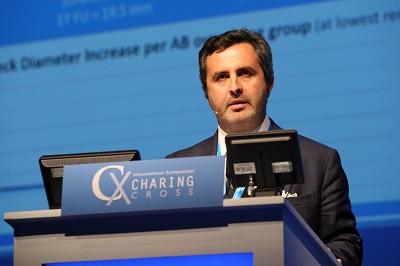
The INNOVATION study found that the rate of freedom proximal type I endoleaks and the rate of freedom from reintervention in patients who underwent endovascular aortic aneurysm repair (EVAR) with the Incraft (Cordis) device was, respectively, 100% and 95%, at three years. In this interview, CX Daily News speaks to Giovanni Pratesi (Florence, Italy)—who presented the data at CX yesterday—about Incraft and the three-year results.
How does the Incraft stent graft differ from other EVAR devices?
It is a new-generation stent graft system with unique features that have been specifically designed to overcome the limitations of current stent grafts. For example, the ultra-low profile integrated delivery system (14F OD) offers excellent navigational opportunities in challenging access vessels. Additionally, the micrometric deployment system allows for accurate placement—either at proximal and distal attachment site. Bilateral in-situ length adjustment, up to 3cm, permits you to customise every implant on the single patient anatomy. Therefore, the Incraft system, according to the “few-fits-most” concept, is able to cover a large spectrum of anatomies with only 23 product codes, four main bodies and 19 iliac limbs.
What are the main results of the INNOVATION study at three years?
The three-year results of the INNOVATION study have confirmed the very promising one- and two-year outcomes of the study. These data show, at three years, the device is associated with 100% freedom from type Ia and III endoleaks, stent-graft migrations, and device- or procedure-related major adverse events. They also show that the rate of limb patency is 97.8%, with only one case of limb occlusion. Other findings from the three-year data indicate that there is a significant reduction in mean aortic aneurysm diameter, up to 15 mm, compared with two-year data, a freedom from sac increase of 95.6% and freedom from stent fractures of 97.7%. Core lab analysis has identified two cases of aneurysm sac enlargement—both associated with a persistent type II endoleak—and one case of stent fracture, but these events did not appear to have any clinical consequences.
What other data were included in your presentation?
I specifically addressed endograft durability and anatomical preservation in my analysis of the Innovation study. Data from core lab analysis have confirmed the excellent stent graft stability that has already been observed during follow-up. A median proximal migration of 2mm was observed at three-year compared with the one-month computed tomography (CT) scan. The same result was achieved in terms of distal migration with a median change of 1.1mm and 2mm on the right and left side respectively, compared with the one-month CT scan.
Aortic neck diameter, neck angulation and iliac artery diameter, compared with one-month CT scan, were analysed at three years to review endograft influence on anatomic changes during follow-up. The observed 1mm proximal neck dilatation and 2mm iliac artery dilatation, combined with the 0.6 degree changes for infrarenal neck angulation and 2.4 degree for suprarenal neck angulation, confirmed the excellent stent graft conformability to the preoperative anatomy.
What were the main take-home messages from your presentation?
These data confirm the very promising earlier outcomes of Incraft stent graft system and add new evidence regarding its effectiveness in terms of anatomy preservation with a 100% freedom from both proximal aortic neck and iliac dilatation, and from proximal supra- and infrarenal aortic neck angulation changes.
CX Venous Workshop draws in the crowds
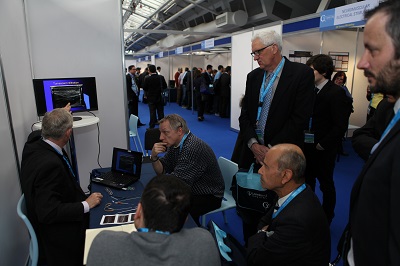
Yesterday saw the beginning of the two-day CX Venous Workshop, in which delegates can enjoy expert demonstrations of a selection of the most interesting and important phlebological technologies currently in use. Now in its seventh year, the event continues to attract more and more delegates to its plethora of new and established technologies, and this year occupied its largest space ever on the Upper Level of the Gallery. The first day of the workshop largely focused on varicose vein treatment and superficial venous issues.
Ian Franklin (Imperial College, London, UK) is leading the workshop over both days, and has done since it first featured at the Charing Cross Symposium seven years ago. He explained, “I think it is important to provide a combination of the big plenary sessions in the hall and smaller interactive workshops like this one—not all techniques and discussions lend themselves the plenary environment. By providing these training stations and this small-group one-to-one teaching format, it means that people can interact in a much more informal, personal level.”
Over its seven years the workshop has grown and changed, keeping pace with the changing face of the vascular field. “The needs have changed,” Franklin commented. “When we first started doing this it was an office-based varicose vein course. Now it is far more than that. We have found that quite a lot of the techniques that people were hungry to learn at the beginning are ‘old hat’ now, so each year we offer new things. Now people are hungry to learn deep vein stenting, intravascular ultrasound, non-thermal techniques for treating veins, and so on. This year we have some completely new things that people will not have seen before.”
Given the quality of the Charing Cross faculty, such one-to-one interaction presents an exciting educational opportunity. “All of our faculty are well-known names and enthusiasts in their field. You can interact with them much better if you talk to them face-to-face rather than if they are up on a podium and you are down in the audience and asking the questions through a microphone. This way you can ask things you might not be able to go into in a lecture theatre.” Franklin added that these face-to-face interactions combine with practical experience, and delegates can “hold the kit in their hands, practice on the simulator and talk through tips and tricks with someone who has done it a lot before—you cannot do that in a lecture theatre.”
The workshop’s layout with multiple training stations also means that delegates can be efficient with their time, heading straight for those stations dealing with subjects they are unfamiliar with. “They do not have to sit through things they already know about, so they can make very efficient use of their time,” Franklin said.
The workshop features both established and new technology. One of the busiest stations yesterday was that of a well-established technology—foam sclerotherapy. Simon Ashley (Plymouth, UK), was one of the trainers at the station. He spoke to CX Daily News during the workshop, and explained, “Personally it is the first time that I have been involved as a trainer, but I know that it has been running for a number of years and has grown increasingly popular—that is why so much space has been devoted to it.” As to why the station was so busy, Ashley noted that foam sclerotherapy “is a walk-in walk-out treatment that only takes about 20 minutes and there is no down time or restriction of activities afterwards. It is also very attractive for NHS and private practice because it is undoubtedly the most cost-effective treatment.”
In keeping with the Charing Cross Symposium’s passion for innovation, there was also a selection of new techniques and products on show. The Biolas station, exhibiting the company’s non-thermal ablation VariClose vein sealing system, was kept busy throughout the day by curious delegates. The company are attending their first ever Charing Cross Symposium, and chief medical officer, Yunus Çakiroĝlu, told CX Daily News “We are new this year, so I think a lot of people are wondering about our products and our company—they want to find out who we are and what we have at our station. The meeting is very exciting, and the workshop is a great way for the delegates to understand new technology.”
The workshop will continue today with a focus on acute deep vein thrombosis interventions, intravenous ultrasound and deep venous stenting, but still including ablation technologies for superficial veins. The stations open for delegates to visit will include: thermal (laser), thermal (radiofrequency ablation), non-thermal, practical training stations, valves, vascular ultrasound training simulator, venous malformations, pelvic venous imaging, pelvic vein embolisation, acute deep vein thrombosis, caval filters, follow-up protocols, air plethysmography, intravascular ultrasound and deep vein stenting.
Franklin expects the Upper Gallery to be just as busy as it was yesterday thanks to the planning of this year’s programme. He said, “We have made an effort to separate the days this year, with Wednesday focusing more on superficial techniques. On Thursday we are going to have a big focus on deep vein stenting, deep vein thrombosis treatments, pelvic vein embolisation and intravascular ultrasound. These are all quite new for us and should attract a new group, so I expect it to be busy tomorrow as well.”
Still few useful indicators of how to prevent aneurysm growth and rupture
According to Janet Powell, Imperial College London, UK, the highest risk factors for rupture of abdominal aortic aneurysms (AAA) are female gender, smoking, increasing age and mean arterial pressure, but there are still few useful indicators of how to manage screen-detected aneurysms to stop them enlarging. Powell put forward this view during yesterday’s Abdominal Aortic Controversies Main Programme which explored epidemiology, indications and medical management of abdominal aortic aneurysms.
In trying to work out what makes aneurysms grow, Powell said that mostly the “mundane” cardiovascular risk factors have been looked at—alcohol, diet, obesity, smoking, medicines taken, exercise taken.
Turning to the existing and ongoing randomised trials that provide evidence for growth factors, Powell pointed out three trials already completed and without a positive result—AAA:STOP, PHAST and AORTA.
“Even in 2015, it is quite difficult to find information about trials because some trials still remain unregistered. Large epidemiological studies have mainly shown us about the risks for developing aneurysms, but the focus has been on baseline risk factors, not aneurysm progression,” she said.
Powell referred to RESCAN, a large international project primarily with the purpose of looking at optimal surveillance intervals for small aortic aneurysms, which was an individual patient data meta-analysis of small aneurysms, their growth and rupture in more than 15,000 persons.
“As we all know, growth rate increases with aortic diameter—just 1.34mm a year for the smallest aneurysms and 3.63mm when it comes to 5cm aneurysms—with exactly the same growth rate between men and women,” she pointed out.
When it comes to smoking, Powell maintained that the data are remarkably consistent that it increases aneurysm growth rate but that the effect is modest. Similarly, the effect of diabetes to slow or reduce the aneurysm growth rate is very consistent, but small.
“So we identified out of the available baseline data we had only two factors in these 15,000 patients that influenced growth rate and both effects were relatively modest—smoking increases, diabetes decreases. Cholesterol, blood pressure, statins, anti-hypertensive drugs and aspirin had no effect, and the year of enrolment [1985–2008] had absolutely no effect either. Disappointing,” Powell stated.
Rupture rates
Even though rupture of small aneurysms is not common, findings were more informative. RESCAN showed that the smallest of aneurysms take eight or more years before the risk of rupture is anything substantive, but as the diameter increases, so does the risk of rupture. But even for a 5cm aneurysm, it is more than year before risk of rupture exceeds 1%.
Powell pointed to some strong associations with factors that increase rupture rates. “Most notable, the fact that in women, there is fourfold increase in rupture rates vs. men. With smokers there is a twofold increase, with a far bigger effect on rupture than on growth. Mean arterial pressure increases growth rate, as does age. The older you are, the more likely your aneurysm is to rupture for any given diameter. So we cannot have any of this ageism, we need to treat aneurysms in older people too,” Powell maintained.
In the EVAR 2 trial, and subsequently reproduced in other papers, Powell observed that aortic neck length was associated with rupture and the shape of the aneurysm might have mattered, and a long neck was associated with relative protection from aneurysm rupture.
“Where are we in 2015? For rupture, there are some strong factors increasing risk: female gender, smoking (which we can do something about), increasing age, higher mean arterial pressures (we could have more effective blood pressure control), and the fact that a long aneurysm neck could just be protective. However, for growth, the effects that we have identified are modest: smoking, which increases it, and diabetes, which is protective,” Powell said.
She re-stressed that both of those growth effects are modest, adding that, “unfortunately this leaves us in a position that as yet we have few useful indicators of how to manage screen-detected aneurysms to stop them enlarging other than the old classic that was used for intermittent claudication—stop smoking and possibly keep walking.”
One-year IMPROVE data suggest benefit of EVAR in ruptured aneurysms
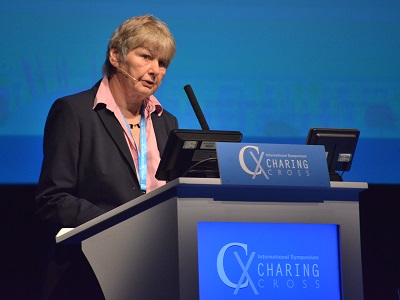
Results from the 12-month data of the randomised controlled IMPROVE trial, presented for the first time at CX 2015 (28 April–1May, London, UK), show that an endovascular strategy is cost-effective when compared to open repair in the treatment of ruptured abdominal aortic aneurysms. The one-year data also revealed that the endovascular strategy conferred no survival benefit over open repair, except a trend towards benefitting women. It also showed that the endovascular strategy enabled more patients to be discharged from hospital to home, and significantly faster than with open repair. Patients also have an excellent quality of life with endovascular strategy, if they survive the rupture, delegates heard.
Twelve-month outcomes from the individual patient data meta-analysis of three randomised controlled trials of ruptured aneurysms [ie the Dutch AJAX trial, the French ECAR trial and the UK IMPROVE trial] also showed a trend towards survival benefit for endovascular aneurysm repair (EVAR), but this was not statistically significant. A CX audience poll in the session revealed that nearly 80% agreed that the 12-month results of the IMPROVE trial encouraged them to perform EVAR more often.
Janet Powell, Imperial College, London, UK, presented the latest data from the IMPROVE (Immediate management of the patient with rupture: Open vs. endovascular repair) trial that reported one-year outcomes following either a strategy of endovascular repair first or open repair of ruptured abdominal aortic aneurysm. The results demonstrate no survival benefit for the endovascular strategy for ruptured aneurysm at one year. However, an endovascular-first strategy for the management of ruptured aneurysms does offer patients faster discharge with better quality of life and it is also cost-effective. Both these factors are necessary for patient and clinical decision-making, delegates heard. These data were published in April in the European Heart Journal (EHJ).
IMPROVE, a pragmatic, multicentre (29 UK and one Canada) trial randomised 613 patients with a clinical diagnosis of ruptured aneurysm, 316 patients to an endovascular-first strategy (if aortic morphology was suitable and open repair if not) and 297 to open repair. Powell also drew attention to the fact that at baseline, the characteristics of the two groups were similar with almost three-quarters in each group being men. “The aneurysms in this trial were also very large with average diameters in each group being over 8cm,” she said. The principal one-year outcome was mortality and secondary outcomes were reinterventions, hospital discharge, health-related quality-of-life, costs, quality-adjusted-life-years and cost-effectiveness.
At CX 2015, Powell noted that the trial was designed to answer the question of what to do with a patient who presents to the emergency room with a diagnosis of ruptured abdominal aortic aneurysm. “What we had anticipated was that using an endovascular strategy, wherever it was morphologically feasible, we could reduce 30-day operative mortality from 47% in the open repair group to 33% where endovascular repair was used extensively,” she said.
Powell added: “At one year, all-cause mortality was 41.1% for the endovascular strategy group and 45.1% for the open repair group (p=0.325) with similar reintervention rates in each. A subgroup analysis showed a stronger benefit for the endovascular strategy in women versus men. The endovascular strategy group and open repair groups had average total hospital stays of 17 and 26 days, respectively.
The 30-day mortality results, the primary outcome, previously published in British Medical Journal (BMJ) in 2014, also found no difference in 30-day mortality between the endovascular strategy group and the open repair group and subgroup analysis showed a strong benefit for the endovascular strategy in women compared with men.
Pooled individual patient data outcomes
Ron Balm presented the 12-month outcomes meta-analysis from the individual patient data from the three randomised controlled trials of ruptured aneurysms; the Dutch AJAX trial (Annals of Surgery 2013), the French ECAR trial (EJVES 2015) and the UK IMPROVE trial.
“These were all trials that were performed on patients with a clinical suspicion of ruptured aneurysm. In the AJAX trial the 30-day mortality in both groups was approximately 25%, in ECAR it was 22% and in IMPROVE, which had a slightly different study design, it was 35% in each group (BMJ 2014), but all failed to demonstrate the benefit of EVAR in the emergent setting. “The results were hampered by the fact that open repair performed so much better than we expected,” Balm noted.
The pooled inpatient data was subjected to two different analyses; the first was an analysis as randomised including all patients and the second contained only those patients with proven rupture and a restricted cohort from the IMPROVE trial who were anatomically suitable for EVAR.
“The 30-day survival data showed no significant benefit for endovascular repair. A subgroup analysis of age, sex and Hardman disability index showed that age and Hardman index had no influence on the main results, but female sex was identified as benefitting from endovascular repair. The time to discharge alive from primary admission was also significantly better for patients undergoing EVAR when compared to those undergoing open repair. We also looked at the influence of neck diameter, neck length and neck angulation. Longer neck lengths resulted in better survival for all patients,” Balm said.
In the pooled results of all patients, the three-month mortality rate included only those patients who were fit for endovascular repair, which reduces the patients in the IMPROVE trial. There seems a benefit for endovascular repair but this is statistically not significant, he said.
Summarising the survival results of all pooled patients to one year, Balm said, there is an advantage for EVAR, but this is statistically not significant.
These findings led Balm to conclude that the early data from the pooled inpatient data meta-analysis did not suggest that there was any survival benefit for EVAR. “At one year, the small survival advantage of EVAR is not significant. Yet, although endovascular repair does not offer a significant survival advantage, endovascular repair should be used more widely. Open repair must remain available for those unsuitable for conventional EVAR,” Balm maintained.
Are patients with ruptured aneurysms being turned down too often?
A small majority of voters, 57%, did not agree with the motion “Too many patients with ruptured aneuryms are denied intervention” in an interesting debate on the topic.
Matt Thompson, London, UK, speaking for the motion, based his arguments on the data from Karthikesalingam et al (The Lancet, 2014), which used UK Hospital Episode Statistics (HES) data and US Nationwide Inpatient Sample (NIS) data to show that in-hospital survival from ruptured abdominal aortic aneurysm, intervention rates, and uptake of endovascular repair are lower in England than in the USA.
Thompson stated that 68% of patients in the UK receive no treatment for rupture. “There is a huge variation in the proportion of patients being offered therapy for ruptured abdominal aortic aneurysm at the regional and international level. Non-interventional treatment is universally fatal,” he said.
Thompson argued that apart from identifying the optimal management strategy for patients with ruptured aneurysms, more emphasis should be placed on treatment rates. “We must do better than refuse treatment to around 60% patients,” he said.
Peter Lamont, Bristol, UK, who persuaded the delegates that ruptured aneurysm patients were not being denied interventional treatment too often, contested the data presented by Thompson because with the HES data it made the assumption that the diagnostic code for ruptured abdominal aortic aneurysm without an operative code for the condition was a turndown. He also pointed out that a 2005 coding audit had found up to 23% HES codes to be incorrect. Further, NIS data misses 80% of patients, noted Lamont.
“Numerous direct audits in 2010 and after in the UK show consistent turndown rates of around 20% by vascular surgeons,” he said.
Lamont pointed to a Vascular Society members audit in 2011 that revealed a turndown rate of 24% and also showed that the average age of patients was 83. “Of these, 24% declined intervention, 14% had dementia and 21% had terminal malignancy/severe chronic disease,” he added.
Lamont concluded by saying that the service reconfiguration in the UK guarantees that vascular surgeons are now on call 24/7 for ruptured abdominal aortic aneurysm. “When comparing like for like, the turndown rates in the UK are similar to those in the USA,” Lamont said.
In the ensuing discussion, Powell made the point that twice as many women than men are turned down for treatment when they present with ruptured aneurysm and asked for a response on why this might be the case. “We did not formally address that in the IMPROVE trial, but there are several observational cohorts to suggest that adopting a more minimally invasive approach would lead to a reduction in turndown rates in these patients,” added Thompson.
Thompson explained the criteria for palliation; patients in whom intervention is completely futile, such as those with advanced malignancy or dementia, who have no quality of life are suitable candidates for palliation. “There are patients in whom it is cruel to intervene as they do not want their life prolonged,” agreed Lamont.
Frank Veith, New York, USA, made the point that the way to decrease the turn down rate for ruptured aneurysms was to embrace endovascular repair.
Bioresorbable scaffolds are “the only complete solution for the superficial femoral artery”
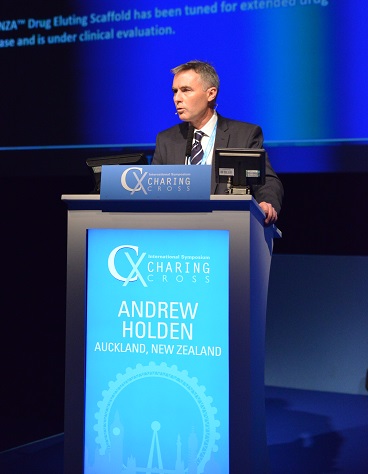
The use of bioresorbable scaffolds is the only complete solution for the superficial femoral artery, argued Andrew Holden, Auckland, New Zealand, in yesterday’s Peripheral Arterial Controversies session.
Presenting an update on the Stanza programme, Holden told delegates that the ideal treatment strategy for superficial femoral artery disease has been the source of much research, discussion and controversy. “An endovascular device should provide vessel support acutely to manage dissection and recoil, include an anti-restenosis strategy and preferably leave nothing behind when no longer needed. A bioresorbable drug-eluting scaffold potentially fulfils these requirements,” he explained.
The programme employed the Stanza platform (480 Biomedical)—a flexible, self-expanding stent design with full resorption in about 12 months. Holden summarised the development of the Stanza scaffold, the first part of which—the STANCE first-in-man trial—allowed “assessment of stent parameters such as precise positioning and deployment, excellent radial resistive force with minimal residual stenosis and satisfactory resorption.”
Two sub-studies in the STANCE trial allowed original validation of important imaging modalities by independent core laboratories. One sub-study analysed the accuracy of quantitative vessel analysis of magnetic resonance angiography (MRA) compared to the gold standard catheter angiography. A second sub-study compared cross sectional luminal area evaluation using MRA and optical coherence tomography (OCT). This comprehensive analysis, Holden explained, confirms MRA is “an effective method to assess the vessel lumen non-invasively after treatment with a bioresorbable scaffold.”
The study showed 100% scaffold delivery success, good scaffold apposition verified by optical coherence tomography (OCT) and angiography, and acute performance similar to metal stents. Holden noted that OCT is a vital tool in the assessment of bioresorbable scaffolds, as it allows investigators to identify scaffold encapsulation during healing and resorption. Using OCT Holden was also able to create 3D reconstructions of the vessel, allowing him to detect any scaffold fractures and show that at six months the scaffold demonstrated chronic strength to prevent vessel recoil.
The drug-eluting version of the Stanza platform is currently being assessed in the SPRINT clinical trial. Holden told attendees that the biggest challenge has been to define appropriate and extended drug release kinetics to deal with the inflammation associated with scaffold resorption. This has been achieved with the drug eluting version of Stanza. Currently, there is ongoing recruitment and evaluation in this trial, as well as several examples with medium-term follow-up.
In one such case study, pre-implant the patient had 88% stenosis, a figure which fell to just 2% residual stenosis following the implant. Similarly, in the second case that Holden presented, the pre-implant stenosis figure was 92%, falling to 0% following the implantation of Stanza. Both of these case studies were evaluated with MRA and OCT to confirm the outcomes.
The best of the new: CX Innovation Showcase features the latest technologies
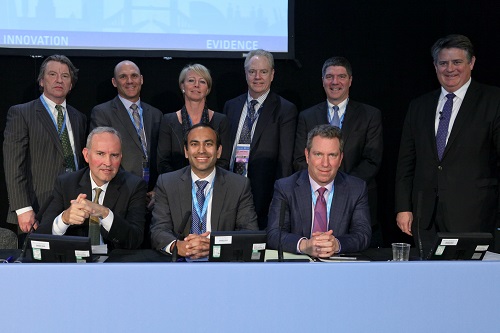
The CX Innovation Showcase is dedicated to highlighting what it takes for a physician-inventor to succeed and for innovative ideas in the vascular and endovascular arena to thrive. Yesterday’s session brought together leading industry experts, physician-inventors, engineers, medtech investors and start-up companies all focused on improving vascular disease management.
Chaired by Stephen Greenhalgh, the 2015 Innovation Showcase covered innovations across five areas: endovascular aortic, complex aortic endografting, peripheral, diagnostic and vascular access.
Vascular access
Andrew Holden (Auckland, New Zealand) presented for the first time at a scientific meeting, the first-in-man experience with the Advance 35 scoring balloon (Cook Medical) in haemodialysis fistula stenosis. He noted that it is well known that stenosis in the haemodialysis access circuit is a common complication for patients on haemodialysis, adding that regular surveillance is important, especially after intervention because restenosis is common. Holden said that the para-anastomotic and outflow stenoses are often resistant to angioplasty using conventional angioplasty balloons at nominal pressures, and frequently, ancillary measures are required, such as scoring or high pressure balloon angioplasty. These ancillary procedures, he said, come at a financial cost as well as a morbidity cost related to upsizing sheaths and guidewire exchanges.
In the early experience with a 0.035” guidewire compatible scoring balloon, specifically designed for the management of fistula stenosis, 39 stenotic lesions in 28 patients were treated. Acute procedural success, as defined by a residual stenosis of <30% was achieved in 38 of 39 patients (97%).
“This compares very favourably to an audit of consecutive patients at the same centre treated with standard angioplasty balloons where procedural success was only 48%. In the trial only one patient required an ancillary procedure to optimise the result where 11 patients required cutting balloon or high pressure balloon angioplasty in the audit group,” Holden reported.
Optical coherence tomography in a sub-group of patients confirmed the scoring effect in treated vessels. At one month, patency was 100%. Six-month patency will be evaluated soon.
“These promising results suggest this 0.035” guidewire compatible scoring technology could become a ‘first line’ tool for the treatment of dialysis fistula stenosis,” Holden concluded.
Endovascular aortic
Bao Bui (Sherbrooke, Canada) made a case for in vivo antegrade fenestration of renal arteries in pararenal abdominal aortic aneurysms (AAA). He said that in vivo fenestration is associated with a low leak rate, it is easy to learn and to perform, there is no wait time using off-the-shelf devices, and the device is possible for emergency use.
He concluded stating that based on initial results (five patients, no leak and no migration 10 months follow-up, all AAAs and the TAAA have decreased in size), in vivo antegrade fenestration is a very promising, reliable technique that is easy to perform with existing devices.
Complex aortic endografting
Patrick Kelly (Sioux Falls, USA) looked at a paravisceral non-anatomical branch endograft system. Noting that repairing short neck, pararenal, paravisceral, and type IV thoracoabdominal aortic aneurysms is challenging because moving the seal zone more proximally increases the risk of paraplegia, he presented a novel approach for sealing just above the celiac.
“We envision the device to be completely off-the-shelf, to lessen or completely negate the need for rotational alignment, and deliver ordered, well-developed flow to the branch arteries. Until the devices are pre-manufactured, we are using physician-modified versions for patients with limited options. The device is made with a diaphragm, which allows for minimal aortic coverage,” Kelly said.
He explained that the paravisceral stent graft configuration is built from a 28–36mm Endurant stent graft (Medtronic) which is shortened to 30mm with the suprarenal fixation hooks left attached. The diaphragm is created from an ePTFE vascular patch. The lumens are made from Viabahn stent grafts (Gore). The paravisceral stent graft is introduced through the groin. The bridging stents for the renal arteries, SMA, and coeliac are introduced through the arm. Once the visceral segment is excluded, a standard EVAR is performed to exclude the remainder of the infrarenal aorta.
“Our experience to date has been one of excellent technical success and early branch vessel patency,” Kelly concluded.
Pierre Galvagni Silveira gave the early clinical results of the TAMBE (Gore) thoracoabdominal branch endoprosthesis. He reported that at 30-day follow-up there was no endoleak and treated branch patency was 100%.
Silveira concluded stating, “The TAMBE device is the only ‘all-in-one’ pre-cannulated off-the-shelf system, including aortic component and side branch stent graft. While the initial results are promising, longer term outcomes are needed to confirm this early experience.”
Shin Ishimaru (Saitama, Japan) presented the Najuta endograft for total branch repair. He said that the primary concept of Najuta was to design a tailor-made endograft suitable for the aorta of each individual patient. “The proximal end of the device is placed between zone 0 and 2, which constitutes the highly critical region involved with the aortic arch and branch arteries. Fixation of the endograft is successful if there is at least 20mm of healthy aorta from the left carotid or subclavian arteries to the margin of the aneurysm,” Ishimura said.
He concluded adding that with almost 200 cases now done in Japan, and five-year data on the horizon, the Najuta fenestrated endograft is a “promising device for aortic arch application”.
Jan Heyligers (Tilburg, Netherlands) discussed spiral vein reconstruction using the greater saphenous vein to reconstruct a neo-aorta in infected cases. Heyligers noted that research has shown spinal vein reconstruction to be technically feasible and a successful alternative for the Glagett-Nevelsteen procedure. He said that the advantages are that no training is necessary, there is no learning curve, diameter is not an issue and there is no morbidity when harvesting the deep vein.
Peripheral
Stephen Williams (Baltimore, USA) discussed helical 3D stenting with the BioMimics 3D stent (Veryan), maintaining that the Mimics data indicate in-stent swirling flow/endothelial wall shear stress could be beneficial to maintain long-term patency. “This is really the only stent in 12–24-month range study to date that seems to offer this improvement in avoidance of late restonotic events,” Williams noted.
He later announced that the US IDE trial for the BioMimics stent is upcoming, with the first enrolment expected by the end of this quarter.
Patrick Kelly presented the early results of paclitaxel after endorevascularisation, concluding that drug infusion balloons could have great potential.
“We believe it to be more favourable [than drug-coated balloons] in many regards, including: shorter regulatory path, lower device cost, and more flexibility in the therapeutic used,” Kelly maintained.
He explained that he has been working on this project with two parallel paths: clinical research using an already available infusion balloon, and bench top and animal research to evaluate various excipients. “In the clinic, we have seen an improvement in freedom from binary restenosis and freedom from target lesion revascularisation. On the benchtop and in animals we have evaluated cremaphor, urea, contrast, and Abraxane.”
He reported that notably, “Abraxane shows superior tissue penetration in our animal models when quantified with a validated high performance liquid chromatography method. The Abraxane is also a superior in terms of biocompatibility without the need for any toxic solubility agents.”
The next step in the research will include a prospective randomised blinded clinical study of 150 limbs with de novo lesions.
Diagnostic
David King (London, UK) returned to the CX Innovation Showcase this year after his winning pitch in the 2014 Dragons’ Den. Yesterday, he presented his Blue Dop technology (with which he won the 2014 £1000 Dragons’ Den prize), and made a case for the technology’s empowerment of nurses in vascular investigations.
King said that Blue Dop empowers tissue viability nurses working in the community to start patient treatment immediately, thus reducing costs for GP practices, reducing the number of hospital referrals, speeding up the patient treatment “journey” and reducing the load on vascular labs.
Dragons slayed by new dialysis graft technology
In the tradition of the CX Innovation Showcase, the highly-anticipated Dragons’ Den did not disappoint in 2015 with presentations of 15 new and innovative ideas from physician-inventors from all over the world.
With much to consider after two hours of impressive presentations, Jeffrey Lawson (Durham, USA) came out on top, winning over the Dragons and gaining the most votes in his favour for his dialysis graft technology.
Lawson spoke to CX Daily News about his technology stating, “It is a novel dialysis graft that is meant to protect patients when their dialysis graft needs to be cannulated by a sharp needle. You can only cannulate the graft or the blood-flowing portion safely and reliably—that is the nature of the innovation.”
In terms of progress, Lawson reported that animal testing with the device has been done and a very mature prototype design has been developed. Further, he said that his team has met with the US Food and Drug Administration (FDA) in light of plans for the first-in-man implant.
Commenting on the value of the Dragons’ Den, Lawson said, “It is a wonderful opportunity, and it is fun. It is also really good to see other people’s technology making progress.”
Speaking to CX Daily News, course director and chairman, Stephen Greenhalgh said, “The feedback I received from the Dragons was that this year saw the most wide-ranging, innovative group of presentations that we have ever had at Charing Cross, and based on voting results—where varying presentations received recognition from the individual Dragons—it shows how closely fought it was.”
Speaking of the future of the CX Dragons’ Den, Greenhalgh added, “I just want to ensure that Charing Cross always provides a platform for early stage innovation.”
Honourable mention was also given to Peter Philips (Didcot, UK) for his ideal compression stocking; Tim Chuter (San Francisco, USA) for his Inchworm balloon; and Lindsay Machan (Vancouver, Canada) for his uniform pressure non-straightening angioplasty balloon.