


CX NEWS
Is it time to reconsider abdominal aortic aneurysm screening programmes?
CX 34 delegates on Sunday heard a variety of reasons why it might be time to question the very foundations on which national aneurysm screening programmes are based. With a population that lives longer, smokes less and has lower cholesterol levels than in the past, it seems that people are developing abdominal aortic aneurysms later in life. Do we need to raise the age threshold for screening? With all trial evidence so far having studied abdominal aortic aneurysm in men between the ages of 65 and 74, is a policy selecting 65 as the age for screening still valid? Have cardiovascular risk prevention programmes pre-empted national aneurysm screening programmes? What is an optimum rescanning interval?
Roger Greenhalgh, London, UK, addressed Alan Scott, Plymouth, UK, as they were both instrumental in providing the evidence on the 5.5cm threshold and basis of screening and said, “We made certain decisions at the time about thresholds and about screening based on information we had at the time. We are hearing a story emerging and may have to be very flexible, and re-look at thresholds and screening intervals and find that they may not be fixed intervals. They might be sliding scale intervals,” he said.
Scott replied that at the time they had been careful to set up the rescreening intervals so that they were safe, erring perhaps on the side of caution.
National screening programmes in the UK, Sweden and Australia are observing a recent reduction in growth and rupture of abdominal aortic aneurysms in 65-year-olds. Jonothan Earnshaw, Gloucester, UK, who opened the session on Sunday at CX34, took to the podium to speak about the UK’s national abdominal aortic screening programme.
In a CX exclusive, he shared draft data showing that between 2009–2012 the programme (with 40% coverage) had screened 157,730 men. The uptake was 80.17% and 2,494 (1.57%) abdominal aortic aneurysms larger than 3cm were detected. Four hundred and four men were referred for surgery.
“Perhaps the most interesting point is we were expecting, based on data from the MASS trial, to find approximately 4% of 65-year-olds with aneurysms. In fact, we have only found 1.57%. That is still a significant number of men – we have now referred over 400 men for vascular opinion.
I cannot give you outcome data, but of the first 130 screen-detected, 129 patients had survived the intervention.” Earnshaw told delegates that the main issue in screening in 2012 was the fact that “We are not finding as many aneurysms as we thought we would. Twenty-year data from the Gloucester programme showed that the mean aortic diameter has reduced from 21mm in 1991 to 17mm in 2009. There is something happening to the 65-year-old male aorta in Gloucester. This reduction in the number of aneurysms is mirrored elsewhere, in Scandanavia and Australasia, and does seem to be real. Aneurysms do seem to be going away, which is ironic, when we are starting a screening programme.”
On the issue of cost-effectiveness, Earnshaw told delegates that ongoing research suggested that that it was likely that aneurysm screening at the current prevalence would remain cost-effective.
Anders Wanhainen, Uppsala, Sweden, who then took the stage shared similar observations about the reduction of aneursysms being observed. He told delegates that Sweden had adopted a commonly suggested screening design with a single ultrasound examination of men at the age of 65. “The national abdominal aortic screening programme has a nearly nationwide coverage today,” he said. Wanhainen said that the prevalence of abdominal aortic aneurysms in the target population was lower than expected indicating a change in the epidemiology of the disease, mainly attributed to a noticeable reduction in smoking frequency. “We therefore need to continue to monitor and assess the screening programmes already established and simultaneously evaluate alternative screening strategies,” he said.
Describing the situation in Australia, Paul Norman, Fremantle, said that experts were adopting a wait and watch approach rather than implementing a national screening programme because the magnitude of benefit from screening is small. “Mortality is falling without screening. I would question whether there is enough of a public health problem to warrant screening.”
Is the rupture rate falling?
Janet Powell, London,UK, told delegates that the rate and volume of aneurysm rupture is declining. She made the point that smoking prevalence had decreased, and use of lipid-lowering and antihypertensive drugs had increased in those who were 65+ years. “The small aneurysm rupture rate is decreasing and deaths from (and hospital admissions for) large ruptured aneurysm are decreasing. Since selection for repair and its mortality are unchanged, have cardiovascular risk prevention programmes pre-empted national aneurysm screening programmes?” she asked.
Martin Bjorck, Uppsala, Sweden, told delegates that an aneurysm screening programme should include a smoking cessation programme, promotion of exercise and healthy diet and statin treatment prior to surgery. There should also be hypertension treatment, according to standard of care, he said. “As we all know, screening elderly men for abdominal aortic aneurysm, and repair of those who have or later develop large aneurysms, reduce aneurysm mortality by between 50 and 70%. “Can we prevent growth of small aneurysms? Can we prevent cardiovascular events? Can we prolong life with secondary prevention? Unfortunately, we lack specific data on patients with screening detected aneurysms,” he said. “Data on the possible effects of statins on aneurysm growth rates are contradictory, and there is no evidence to support that growth is decreased. What is shown, however, in randomised trials, is that short-term statin treatment reduces perioperative cardiac events and mortality, by approximately 50%. Long-term statin treatment prevents events among patients with cardiovascular disease, but there are no specific data on abdominal aortic aneurysm patients.”
Simon Thompson, Cambridge, UK, speaking on behalf of the RESCAN collaboration, told delegates that surveillance intervals for small abdominal aortic aneurysms differed between surveillance programmes. “Some are based on screening trials, but there is no good evidence base/direct comparative data.” The RESCAN Collaboration analysed small aneurysms measuring 3–5.4cm which came from individual patient data over time collated from surveillance programmes/other longitudinal studies.
Data were collated from 18 studies in the UK, Europe, North America, and Australia, involving 15,471 patients followed for up to eight years. There were 228 ruptures, aneurysms were measured mainly by ultrasound (external diameters) and there was a 5.5cm threshold for surgery. Results of the analysis showed that the average growth rate is 2.2mm/year and the average rupture rate is 0.2% per year. “For each 0.5cm increase in aneurysm diameter, the growth rate goes up by 0.5mm/year and the rupture rate doubles. There is large heterogeneity in these rates between studies, which is unexplained. Women have the same growth rates but four times the rupture rates of men, at each abdominal aortic aneurysm diameter.” Thomson told delegates that the clinically acceptable surveillance intervals for men are several years for 3–4cm aneursyms and six months for 5cm aneurysms. “Intervals/threshold for surgery in women should reflect those for men with 0.5–1cm larger aneurysms, and the cost-effectiveness of different surveillance policies needs to be formally assessed,” he said.
Live from CX 34: We prefer external aortic wall diameters in screening, 71% of the delegates say
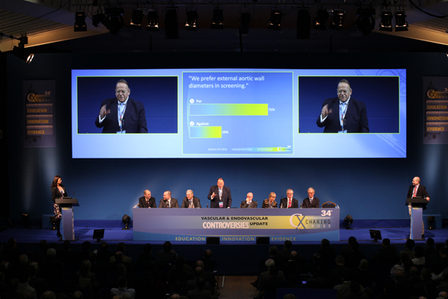
In the first debate at Sunday CX 34, Naghmana Riazuddin, Wycombe, UK, won the motion “We prefer external aortic wall diameters in screening” with 71% of the vote. Her opponent was Tim Hartshorne, Leicester, UK.
First time presentation of one-year results from PACIFIER reinforces role of drug-eluting balloons
Preliminary results from eight patients within the 12-month follow-up window of the PACIFIER trial showed significantly lower target lesion revacularisation was needed for patients in the drug-eluting balloon group vs the percutaneous transluminal angioplasty group. Similarly six-month follow-up from FREEWAY demonstrated a lower target lesion revascularisation rate after Freeway drug-eluting balloon and stent than after plain old balloon angioplasty and stent.
Michael Werk, Berlin, Germany, presented the preliminary 12-month results of the PACIFIER study, which is a randomised, multicentre trial that evaluated the prevention of restenosis with paclitaxel-coated angioplasty balloons in stenosis or occlusion of femoropopliteal arteries. Werk said that the In.Pact Pacific device (Medtronic) significantly reduced neointimal hyperplasia and restenosis rates compared with standard percutaneous transluminal angioplasty in claudicants.
He added that the six-month outcomes had shown that the drug-eluting balloon was associated with a 0.01mm late lumen loss compared with 0.65mm for standard percutaneous transluminal angioplasty (p=0.0014) – of the randomised controlled trials so far for drug eluting balloons, this is the best result for late lumen loss.
Concluding, Werk said that the final 12-month clinical results were awaited and, so far, no coating-related adverse events had been noted. He said: “PACIFIER confirms and reinforces the role of drug-eluting balloons as already seen from previous similar trials.”
FREEWAY
Presenting the six-month results of the FREEWAY study, Stephan Duda, Berlin, Germany, said the study is investigating the inhibition of restenosis by stenting and angioplasty with a paclitaxel-eluting balloon (Freeway, Eurocor) postdilatation compared with stenting and angioplasty with plain balloon postdilatation in the treatment of superficial femoral artery or PI-segment lesions.
The multicentre, open, prospective randomised trial will enrol 200 patients with stenotic or occluded de novo lesions at 15 German and Austrian centres.
The primary endpoint is the rate of clinically driven target lesion revascularisation at six months. Forty six patients have reached six months of follow-up. Duda showed cases of lesions treated with the device. The preliminary results, he said, demonstrated a low target lesion revascularisation rate of 8.3% after Freeway drug-eluting balloon and stent vs. 14% after plain old balloon angioplasty and stent at six months of follow-up.
Medtronic launches largest ever superficial femoral artery drug-eluting balloon study
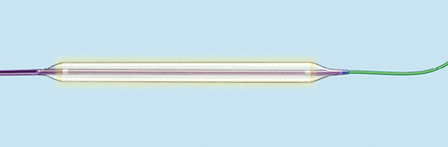
In May 2012, Medtronic will initiate the IN.PACT Global SFA Trial, a single arm, real-world study of the IN.PACT Admiral drug-eluting balloon (DEB) for revascularisation of femoral-popliteal arteries in patients with claudication and rest pain. The study will be part of the company’s drug-eluting balloon programme which already includes eight registries and 10 randomised controlled trials.
The study, which will enrol 1,500 patients across approximately 80 centres, represents the largest study ever conducted in superficial femoral artery revascularisation. The primary endpoint is clinically-driven target lesion revascularisation at 12 months and primary patency at 12 months for the “imaging cohort” with either in-stent restenosis or long lesions >10cm.
This controlled study will have independent monitoring, corelab evaluation and Clinical Event Committee adjudication to contribute to the robustness and reliability of results. Patients will be followed up to five years.
“A single-arm study of this size offers unrivalled value in the assessment of real world population and patient subgroups characterised by either isolated or combined complexities such as long lesions, in-stent restenosis, heavy calcifications, total occlusions etc,” said Gunnar Tepe, chairman of the Study Steering Committee, at CX 2012.
Medtronic’s clinical programme with IN.PACT include:
PACIFIER
This randomised superficial femoral artery trial confirmed the effect of IN.PACT DEB to significantly reduce late lumen loss and restenosis rates at six months vs. angioplasty. With a late lumen loss rate close to zero, PACIFIER reinforced the findings from previously reported drug-eluting balloon trials on the efficacy of drug-eluting balloons in the femoropopliteal bed for symptomatic patients affected by claudication and rest pain.
DEB SFA Italian Registry
In a recent publication (J Am Coll Cardiol Intv 2012;5:331–8), Micari et al described the clinical and functional results at one year of a 105-patient superficial femoral artery series treated with drug-eluting balloons. The study investigators showed a high 83.7% patency rate obtained with IN.PACT Admiral with a remarkably low stent rate of 12.3%, associated with a significant improvement of clinical and functional endpoints including quality of life and walking capacity.
Debulking and drug-eluting balloons Initial data from Thomas Zeller (Bad Krozingen, Germany) and Angelo Cioppa (Mercogliano, Italy) also signal IN.PACT DEB to be an effective adjunctive therapy to atherectomy for the treatment of superficial femoral artery lesions, especially when complicated by severe calcifications.
At LINC 2012, Cioppa reported a 10% restenosis rate at one year from his 30 patient series whereas Zeller presented his experience on 29 drug-eluting balloon patients after atherectomy. At one year, primary patency was at 88% with combined debulking and drug-eluting balloon treatment.
DEB in in-stent restenosis
While four trials are currently ongoing evaluating IN.PACT in superficial femoral artery in-stent restenosis, initial insights for this indication were given by Stabile at LINC 2012, where he presented his experience of 39 patients with superficial femoral artery in-stent restenosis. At one-year follow-up, he reported a low target lesion revascularisation rate of 7.9%.
DEB below the knee
Further down to infrapopliteal vessels, the results from the published Leipzig DEB BtK Registry (Schmidt et al, J Am Coll Cardiol 2011;58:1105-9) show a low 27.4% restenosis rate at three-month angiography in complex and long (average 176±88mm) below-the-knee lesions and occlusions.
Results appear particularly convincing when benchmarked to an historical similar patient group treated with angioplasty. Francesco Liistro (Arezzo, Italy) presented preliminary results of the DEBATE BTK randomised trial of IN.PACT Amphirion vs. standard angioplasty for the treatment of below-the-knee lesions in patients affected by critical limb ischaemia and diabetes.
With a lesion length of 121 and 123mm respectively, restenosis (29% vs. 72%; p<0.001) and occlusion rates (14 vs. 50%; p<0.001) both showed highly significant differences in favour of DEB at one-year follow-up.
DEB in arteriovenous shunts
Katsanos (Patras, Greece) presented the results of a randomised trial of IN.PACT Admiral vs. standard angioplasty for the treatment of dysfunctional arteriovenous fistulae reporting a significant improvement in patency rates in favour of drug-eluting balloons at six months. While further clinical research is warranted and underway the unceasing, broadly emerging evidence around IN.PACT DEB continues to enforce trust and boost adoption to address the daily challenges of peripheral arterial disease. Optimal percutaneous transluminal angioplasty concept and practice is being re-evaluated and the value of “leave nothing behind” reappraised for the long term benefit of patients.
First experience with a bioabsorbable stent for the superficial femoral artery presented at CX
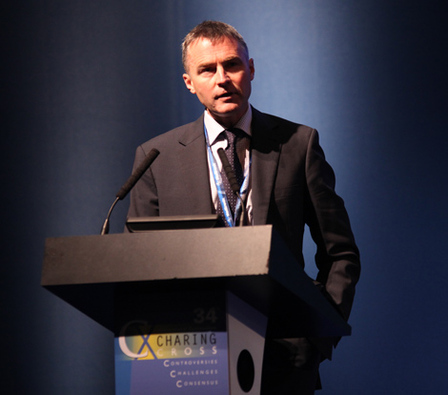
The first-in-man experience results with a new bioresorbable scaffold for superficial femoral artery lesions were presented by Andrew Holden, Auckland, New Zealand, yesterday. Holden described the Stanza Bioresorbable Scaffold System from 480 Biomedical and initial case experience from the first patients treated in the STANCE trial.
The Stanza scaffold is the first self-expanding bioresorbable technology being developed for treatment of atherosclerotic disease in the superficial femoral artery, Holden said. He added that “the scaffold design is a composite structure of strong PLGA fibers in combination with an elastomer. This design enables the scaffold’s key attributes of flexibility and radial stiffness, similar to self-expanding metallic stents. Preclinical animal studies demonstrate biocompatible resorption of the scaffold over six to 12 months. The scaffold, which uses a conventional retractable sheath delivery system, is being tested in the STANCE trial in target lesions up to 100mm in length and diameters between 4.6–6mm.”
The STANCE trial is a prospective, single-arm, multicentre trial of the Stanza scaffold in patients with symptomatic atherosclerotic disease of the superficial femoral artery. The primary endpoint of the trial is major adverse events at six months, with evaluation of vessel patency and other functional and quality of life metrics assessed three, six, 12 and 24 months post-procedure. 480 Biomedical expects to enrol up to 60 patients in the STANCE study at sites in New Zealand, Australia and Europe by the end of 2012.
Holden told delegates that, in the Auckland City Hospital experience with nine patients treated to date, 100% procedural success was achieved with the Stanza scaffold. He noted that the scaffold was accurately deployed in the targeted superficial femoral artery lesion and blood flow was restored to the leg as evidenced by angiography and Doppler ultrasound.
“At Auckland City Hospital, treated vessels were also imaged using optical coherence tomography (OCT), a modality that has been used in coronary interventions but never before used in clinical trials for superficial femoral artery treatment. Post-procedure OCT images showed good vessel wall apposition with the Stanza scaffold. Additional OCT and MR angiographic analysis of the treated area will be conducted at six and 12-months to enable visualisation of the scaffold as it dissolves over time,” he said.
Is the task for TASC III consensus too great?

Preparations for TASC III, which seeks to achieve transatlantic and interdisciplinary consensus, are underway. Saturday’s plenary session at CX 34 saw experts from a variety of disciplines thrash out the challenges that beset TASC IIb, and outline what could be achieved with its successor. Some speakers taking to the podium challenged the notion of whether these guidelines are based on scientific evidence or expert opinion, while others questioned the validity of anatomical treatment recommendations as well as discussed how to balance the importance of consensus in the absence of high-grade scientific evidence. Johannes Lammer, Vienna, Austria, and Roger Greenhalgh, London, UK, chaired the session in which the majority of the audience felt that the TASC III was attempting to consider too many eventualities.
The discussion highlighted the difficulties that TASC III contributors will have in achieving a workable consensus. To the question “Did you expect TASC anatomical lesions to change from 2000 to 2006?” a majority of voters, 71%, said “yes”. To “How should TASC III lesions be classified?” 1) Fixed anatomically, so that treatment modality changes over time? 68% voted yes. Fifty nine per cent of the audience then said this would NOT determine to which discipline a patient is referred. Then, 73% voted that the individual clinician should determine mode of intervention”. The vote to the last question was particularly telling, 75% voted yes to the question: “Is there a danger of TASC III attempting to consider too many eventualities?”
Balancing consensus and evidence
A theme that recurred was the issue of balancing consensus and scientific evidence. Greenhalgh requested a comment on how consensus needs to take into account evidence and in what way. To this, Lammer replied: “With TASC IIb, the challenge really was the lack of evidence. The question is, and this is a problem also for TASC III, how much should consensus overrule evidence, or lack of evidence?” In the session, William Hiatt, Denver, USA, who spoke on the topic “Why was TASC initiated and what is achievable?”, said the goal of TASC I was to achieve a consensus in the “management of individual patients with identical conditions.” TASC I aimed to represent all relevant key disciplines… and indentify and represent minority views. It was begun in 1996 and published in 2000,” he said. Hiatt noted that TASC I was the first major vascular guideline that represented all vascular disciplines across Europe and North America and achieved consensus on all but one recommendation. He said that it established TASC lesion classification to guide revascularisation decisions. Hiatt noted that the TASC III Writing Group consisted of Chapter Groups with a lead author and chapter Writing Group members who represent a diversity of expertise, vascular disciplines, societies, and geography.
“Every reference is reviewed prospectively for quality and relevance. The writing group had declared all industry disclosures and there was appropriate separation from industry support,” he noted. Hiatt also told CX delegates that the disagreements on specific recommendations were noted in final text with societies in agreement and in disagreement listed. He also outlined what was achievable with TASC III at CX 34. “TASC III seeks to achieve a consensus between surgical and endovascular societies. The response to TASC IIb was disappointing but current inter-societal engagement is encouraging,” he noted. On the question of whether it was possible to create a more integrated and clinically-relevant classification of peripheral arterial disease, he noted that TASC III would include the key components of: patient, limb and lesions. He added that TASC III would establish new standards for regulatory approval and reimbursement of new therapies. For critical limb ischaemia, it would expand on amputation-free survival to include healing of ischaemic ulcers, relief of ischaemic pain, avoidance of additional procedures and improvement in functional status, he said. Lars Norgren, Örebro/Lund, Sweden, then spoke on “The purpose of TASC II and TASC IIb; What is expected of TASC III?” He said that while TASC (2000) was intended mainly for specialists, TASC II aimed also at reaching referring physicians focussing on:
Key aspects on diagnosis and management
Updating and providing new information
Making graded recommendations
The resulting TASC classification was related to the appropriate mode of revascularisation with TASC A lesions being appropriately treated by endovascular means, D appropriate for open surgery, endovascular revacularisation being preferred for TASC B and surgical revascularisation for C. “The outcome of TASC II was >1600 citations on Google Scholar of which some were critical. Therefore TASC IIb set out to update the TASC lesion classification; add an infrapopliteal classification and clarify the role of endovascular treatment (vs. surgery) based on technical developments and professional skill despite the lack of level 1 evidence,” said Norgren. He told delegates that the principal conclusion of TASC IIb was an endovascular first approach, with open surgery for complex lesions or endovascular failure. “However, surgical societies saw this conclusion as being weighted too much in favour of endovascular therapies and the recommendations for open surgery as too weak,” he said. He also outlined some of the controversial issues pertaining to TASC IIb. “Scientifically valid rigorous guidelines are expected, but the trials rarely exist. The recommendations were based on grade C evidence in line with practical handling. In TASC, TASC II, TASC IIb, the recommendations were based on single lesion (anatomical) management,” he said. “Consensus was not achieved despite endorsement from most societies, and the decision was made to move to TASC III,” Norgren added. He told delegates that in preparation of TASC III, “All basic information achieved for TASC IIb is set to be further discussed and included as appropriate. There is also a move to expand discussion from prior TASC guidelines, which were lesion-based to a patient/limb/lesion consideration. The point that critical limb ischaemia ≠ intermittent claudication was being highlighted and TASC III would consider issues of experience, availability, resources. All strategies (including endovascular/surgery and hybrid) require active and honest individual and societal discussion for consensus,” he said.
What is expected of TASC III?
Norgren told delegates that TASC III was expected to satisfy the need for all specialists, comply with technical development, update the evidence grading, modify the change in evidence, focus on relevant classification(s), increase referencing, reflect the situation in developing countries and stay truly global. “Currently, all societies are committed, relevant Chapter Groups have been formed, there is an ongoing literature search and details of evidence grading are being worked out,” he said.
What were the problems with TASC IIb?
Michael R Jaff, Boston, Massachusetts, said that TASC was a true attempt to collaborate across nations and specialties to develop guidelines for the diagnosis and management of peripheral arterial disease.
“So, why TASC IIb?,” he asked, and then outlined that significant time had passed since the publication of TASC II. There has been a rapid expansion of endovascular technologies to treat peripheral arterial disease and major practice shifts to an “endovascular first” paradigm. He said that the goal of IIb was to update TASC II as an interim report and summarise published literature since TASC II. There was also a goal to update the anatomic recommendations regarding treatment strategies and outline situations where an “endovascular first” approach is reasonable. Jaff noted that Vascular Surgery had been unwilling to sign off on TASC IIb, claiming that the recommendations were based on low quality literature. “The Society for Vascular Surgery could not endorse an ‘endovascular first’ approach for any anatomic scenario,” Jaff noted.
He said that vascular surgeons would identify and emphasise the weakness of catheter-based intervention, poor durability in infrainguinal peripheral arterial disease and say that surgical patency rates were far superior. They would also say that catheter-based intervention could burn bridges to surgery down the road, was costly and the data was limited and of poor quality. “So, why endovascular first?” he asked and outlined that it was a low-risk procedures in skilled hands that was unlikely to “burn” the surgical bridges. Also, “Surgical revascularisation is not without risk, cost, and need for repeat intervention, similar to percutaneous transluminal angioplasty. The ideal surgical candidate is becoming harder to find due to older age, tissue loss and poor conduit. The ideal management will likely be integrated/hybrid on a background of comprehensive medical therapy.” In a talk titled “Scientific evidence or expert opinion?”
Jim Reekers, Amsterdam, The Netherlands, emphasised that evidence-based guidlines should be based on scientific evidence. “Expert opinion can be used to comment on, or interpret scientific evidence, and in the absence of evidence, can be used as the opinion of an expert or someone who knows a lot about a topic. However, expert opinion is not scientific evidence and should only be used when scientific evidence is lacking or cannot be generalised for a whole population,” he said. Reekers made the point that TASC III would be a scientific document if it was evidence-based, and a political document if it was a consensus document which was based on expert opinion.
Henrik Sillesen, Copenhagen, Denmark, noted that one major change from TASC I to TASC II was how indications for revascularisation were put into clinical perspective, not least how important risk factor management and proper medical treatment should be advocated as the primary treatment in non limb-threatening peripheral arterial disease (claudication). Sillesen noted that indication for invasive treatment of patients with lower limb vascular disease depends on severity of symptoms in the context of the patient’s history, function and situation in general. It also depends on results of non-invasive treatment, location and extent of lesion(s), and multiple segments (aorto-iliac, femoral and crural). In short, he said, it depends on the individual patient. On the other hand, Sillesen noted, the TASC classification of lesions, which is based on degree of stenosis on angiograms, does not predict symptoms, does not predict ankle brachial index and does not predict outcome. Images of arteries (angiograms) does not reflect function “Guidelines for treatment should reflect indication, options, including the non-invasive option, and evidence before recommending anatomy-based invasive treatment,” said Sillesen. Therefore, he said, the TASC classification should only be used as a surrogate for actually describing the lesions.
Sillesen made the point that guidelines were valued by “those who write them, scientific societies and those who happen to have a practice that fits to the guidelines.Many are unhappy with guidelines as they feel it limits their options and some feel that guidelines are unnecessary because they, after all, are doctors and can think for themselves,” he said. Then, Vincent Riambau, Barcelona, Spain, told delegates that intermittent claudication and ischaemic rest pain are included in TASC (2000 and 2007) recommendations and advices. “There is an absence of meaningful Grade A data comparing surgical to endovascular strategies, revascularisation recommendations are mainly Grade C and evolving technology is not enough to justify continuous modifications on strategy management. TASC III will need more evidence in terms of comparative revascularisation strategies and cost-effective analysis,” he said. Erich Minar, Vienna, Austria, made the point that he did not believe that anatomical treatment recommendations were of any use in clinical practice. He said that the simplified classification of TASC A, B, C, and D did not really have the same importance as clinical presentation (ie claudication vs. critical limb ischaemia, lifestyle limitation, comorbidities and age). Minar noted that there is poor inter-observer agreement on the TASC II classification of femoropopliteal lesions, citing T Kukkonen et al; Eur J Vasc Endovasc Surg 2010 and showed the image of a lesion that correlated poorly with none of the TASC II classes. Minar said that the “C” in TASC stood for compromise, rather than consensus. “Compromise is a settlement of differences in which each side makes concessions. Is this really in the interest of each patient ? Is a political compromise in the interest of each person?“ he questioned.