


CX NEWS
Lack of funding for supervised exercise programmes is a global problem
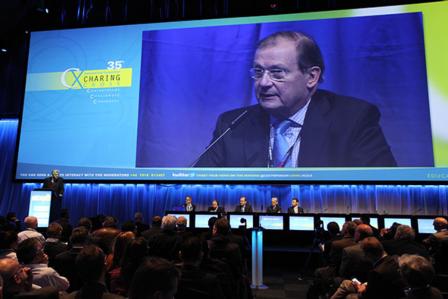
Despite evidence supporting the benefit of supervised exercise in intermittent claudication, there is a worldwide scarcity of funds for programmes. Experts were united in their frustration that there is a global lack of funding despite the rhetoric of the need to focus more on prevention.
Delegates heard that Cochrane reviews, the highest standard in evidence-based healthcare, suggest that the key to patients with intermittent claudication living longer is for them to stop smoking, begin a programme of supervised exercise and undergo best medical therapy. Yet, worldwide there is a shortage of financial support for studies examining the benefit of supervised exercise.
Ninety per cent of the CX audience voted that they would recommend Nordic walking (used as a surrogate term for supervised exercise), and only 10% said they would not. Jonathan Beard, Sheffield, UK, said: “Why on earth is there no funding for a supervised exercise programme for arterial disease? I think this would be something for the European Society [for Vascular Surgery] or the international societies to push for in terms of health advocacy. We are a bit too focused on technical interventions. The best thing for patients is for them to exercise, after stopping smoking.”
CX chairman Roger Greenhalgh made the point that it was only after the conditions of smoking cessation, best medical treatment and supervised exercise are met that technical interventions were to be undertaken. He said, of trials that compared one technical intervention against another, that “such comparisons are not entirely legitimate as they have the same basic slant. Supervised exercise is known to be beneficial yet this is not included in the trial designs.”
Greenhalgh referred to the MIMIC trials, two multicentre randomised controlled trials which investigated whether there is adjuvant benefit of percutaneous transluminal angioplasty over supervised exercise and best medical therapy in the treatment of intermittent claudication. Investigators found that angioplasty confers adjuvant benefit over supervised exercise and best medical therapy in terms of walking distances and ankle brachial pressure index 24 months after angioplasty in patients with stable mild to moderate intermittent claudication.
Describing the situation “across the pond”, Barry Katzen, Miami, USA, told CX Daily News that while there were plenty of data to suggest that supervised exercised conferred benefits in intermittent claudication, there were currently no initiatives, and certainly no funding to study and implement this. “There is now a push from the Government towards funding preventative or less invasive medicine. A small minority of medical practitioners in the USA question whether intermittent claudication is indeed a disease, it is seen more as a quality-of-life issue. There is no currently no funding to study supervised exercise within studies or trials and I do not see a change in the funding scenario in the future,” said Katzen.
Greenhalgh described the situation in Britain colloquially as “giving the money to the doctors and then incentivising them not to spend it. Intermittent claudication is not a disease, but a milder symptom of peripheral arterial disease. It is fair to say that there is currently no funding available for supervised exercise globally, and in Britain,” he said.
Plinio Rossi, one of the legends of interventional radiology, also told CX Daily News that “supervised exercise is very important, but seen as too expensive to be funded by the state. It is clear that supervised exercise is far more beneficial that exercise advice (unsupervised); the latter just does not hit the spot.”
Beard, speaking on the topic “Nordic walking: more effective than standard exercise programmes for claudicants?” told delegates that unsupervised exercise (ie. advice) does not work. “We do know that supervised exercise programmes are more effective than angioplasty and stents, but there are problems with compliance and funding, and many countries will not fund it. How do we ensure funding for exercise therapy for patients with peripheral arterial disease? What level and duration of support is required and which regime gives the best long-term compliance?” he asked.
Chairman Frans Moll, Utrecht, The Netherlands, told delegates at the session, “In the Netherlands, the healthcare insurance companies are reimbursing supervised exercise even beyond the six months, and specifically for claudication. Are there any other countries doing this?” On finding out from the audience that Switzerland was the only other country with this practice, he said that the situation was “certainly underdeveloped. Smoking cessation, supervised exercise and best medical practice are the key to healthcare,” he said.
New magnetic resonance imaging method fingerprints tissues and diseases
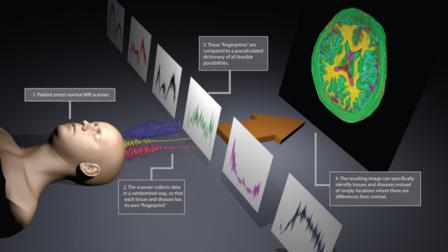
A new method of magnetic resonance imaging (MRI) could routinely spot specific cancers, multiple sclerosis, heart disease and other maladies early, when they are most treatable, researchers at Case Western Reserve University and University Hospitals (UH) Case Medical Center suggested in the journal Nature.
Each body tissue and disease has a unique fingerprint that can be used to quickly diagnose problems, the researchers said.
By using new MRI technologies to scan for different physical properties simultaneously, the team differentiated white matter from gray matter from cerebrospinal fluid in the brain in about 12 seconds, with the promise of doing this much faster in the near future, according to a release.
The technology has the potential to make an MRI scan standard procedure in annual check-ups, and a full-body scan lasting just minutes would provide far more information and ease interpretation of the data, making diagnostics cheap compared to today’s scans, they stated.
“The overall goal is to specifically identify individual tissues and diseases, to hopefully see things and quantify things before they become a problem,” said Mark Griswold, a radiology professor at Case Western Reserve School of Medicine. “But to try to get there, we have had to give up everything we knew about the MRI and start over.”
Griswold has been working on this goal with Case Western Reserve’s Vikas Gulani, an assistant professor of radiology, and Nicole Seiberlich, assistant professor of biomedical engineering, for a decade. During the last three years, they developed the technology and proved the concept with graduate student Dan Ma Kecheng Liu, collaborations manager from Siemens Medical Solutions Jeffrey L Sunshine, professor of radiology and a radiologist at UH Case Medical Center, and Jeffrey L Duerk, dean of Case School of Engineering and professor of biomedical engineering.
A magnetic resonance imager uses a magnetic field and pulses of radio waves to create images of the body’s tissues and structures. Magnetic resonance fingerprinting (MRF) can obtain much more information with each measurement than a traditional MRI.
“With an MRF,” Griswold said, “we hope that with one step we can tell the severity and exactly what’s happening in that area.”
Other researchers have tried to use multiple parameters in MRI’s, but this group was able to scan fast and with higher sensitivity than in previous attempts, he continued. “This research gives us hope. We can see that it is possible the MRI can see all sorts of things.”
The group expects to reduce scanning time and continue to collect a library of fingerprints, over the next few years.
Case Western Reserve and UH Case Medical Center have a 31-year history of developing MRI technology with Siemens. The MRI manufacturer and National Institutes of Health supported the research.
Live from CX 34: Landslide victories for Lowell Kabnick
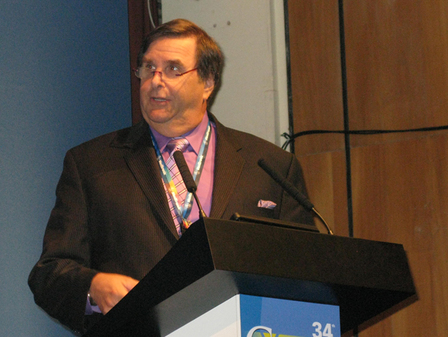
Lowell Kabnick, New York, USA, successfully persuaded 84% of delegates to support his argument against the motion “Tumescent anaesthesia is no longer a benefit in superficial vein ablation in the office.” He explained that there was no “level one evidence” for tumescentless procedures at present. His opponent (who received 16% of the vote) was Steve Elias (Englewood, USA).
Also at CX today, Kabnick won 76% of the vote in the debate “Foam sclerotherapy for truncal ablation is underused”. He was again arguing against the motion. He said: “Foam sclerotherapy is overused, it is not as efficacious as ablation, there is concern about stroke, and it is not approved by the FDA.” His opponent was Jonothan Earnshow, Gloucester, UK, who only received 24% of the vote in his bid to support the motion of the debate.
Live from CX 34: Early results of fenestrated endovascular repair in the UK
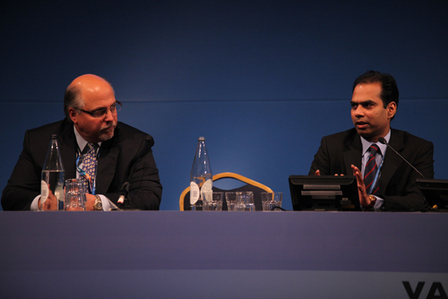
Rao Vallabhaneni, Liverpool, UK, presented data from the BSET study. He told CX delegates the study set out to investigate what the magnitude of early benefit from the procedure was (for instance, a decrease in death); measure how long this lasts and what the target vessel patency is.
The study included all fenestrated EVAR procedures done between 2007 and 2010. Data were included from centres that have done more than 10 procedures and branched EVAR cases were not included. Data were collected online, Vallabhaneni said.
“Three hundred and eighteen patients (of which two were unsuccessful) were treated. The mean age was 74 years (47–86). The mean aneurysm size was 65mm (46–113). Cook stent grafts were used in all cases,” he said.
The analysis showed that combined in-hospital and 30-day mortality was 4.1%. There was approximately a 7% absolute risk reduction, he noted. “The complexity of the case was not related to the risk of death; the target vessel patency was acceptable, as serious consequences of target vessel loss is rare and the broad application appears justified,” Vallabhaneni said.
Live from CX 34: Fenestrated and branched EVAR are worthwhile, majority of CX audience votes
On Tuesday, Krassi Ivancev, London, UK, persuaded 62% of the CX audience to support the motion that fenestrated and branched EVAR are worthwhile. In opposing the motion, Jean-Pierre Becquemin, Creteil, France, garnered the remainder (32%).
He told delegates it was important to clarify the terminology: fenestrated stent grafts were used in juxtarenal abdominal aortic aneurysms or pararenal abdominal aortic aneurysms; fenestrated or branched stent grafts were used in suprarenal or thoracic abdominal aortic aneurysms (type IV); and branched stent grafts are used in thoracoabdominal aortic aneurysms. Ivancev said the results of open repair in such aneurysms were associated with a high mortality rate.
Ivancev based his argument on the fact that the results for open surgical repair were unlikely to improve, and that EVAR was a proven concept. “Fenestrated and branched stent grafts results are equal or superior to the results with open repair,” he said.
He admitted that there was not much long-term data for fenestrated and branched EVAR, but emphasised that the mortality from the procedure was nowhere near that of open repair.
“Patients who are unfit for open repair have been treated successfully. Cost-effectiveness of the procedures, comes with skills, the more you learn to do the better you do it,” he said.
Becquemin noted that fenestrated and branched grafts were like “haute couture, very beautiful, but very expensive”.
He told delegates that in order to be considered worthwhile, fenestrated and branched endografts needed to beapplicable to the majority of patients and that patients had to have no other alternative techniques available to them. “Fenestrated and branched grafts should have a reduced mortality and morbidity compared to open surgery, have proven long-term efficiency and be cost-effective. However, none of these prerequisites are fulfilled,” he said.
While he conceded that the mortality with fenestrated and branched endografts was low, he noted that they were associated with a fairly high rate of paraplegia and re-interventions. “There are no data so far to show any proven long-term benefit of fenestrated and branched EVAR,” he said.
Multilayer stent not a breakthrough, say 56% of CX audience
On Monday, CX delegates heard early data on the multilayer stent. In the discussion it became apparent that MARS requires firm thrombosis in the multilayers and flow to occur into the branches. The indicator of success is the reduction of sac diameter and the consensus was not to use the device in ruptured aneurysms. It became clear that the many experts cautioned not to expect too much of the device and to restrict its use in those high-risk patients where there is no other option.
While flow-diversion was acknowledged as a fascinating concept, the ensuing discussion revealed that there were still questions regarding hard endpoints showing the device’s benefit, bail-out strategies after implantation, and whether this technology was ready to be implanted in patients yet… To the question, “Is the multilayer stent a breakthrough?”, 56% of voters said “no” while 44% said “yes”.
Michel Henry, Nancy, France, told CX delegates that the Multilayer flow modulating stent represented an alternative to current devices to treat thoracoabdominal aortic aneurysms and abdominal aortic aneurysms. He explained that the key principles of the multilayer stent are: vortex velocity reduction, flow lamination in the collaterals, flow acceleration, shear stress reduction at the aneurysm neck. The physiological exclusion leads to the branches remaining patent, he said.
In the Moroccan experience, eight thoracoabdominal aortic aneurysms, five abdominal aortic aneurysms and three dissections were treated. Technical success was 100%, on an average between one and four devices were used. Thirty-day outcomes showed that there were no deaths, branch patency was 100% and that there were no neurological complications.
“These are good outcomes if we compare then with current endovascular procedures,” said Henry. “During the follow-up, we observed a progressive sac thrombosis and shrinkage depending on the importance of collaterals. Henry said, “Despite the severity and complexity of the cases we treated, the preliminary clinical results are satisfactory and promising. We did not observe any neurological complications (these are usually to the level of 10-15% of the cases, with current techniques).
The multilayer stent leads to progressive sac thrombosis and shrinkage depending on the importance of collaterals.” Henry told delegates “To have good results, it is important to have a perfect technique of implantation and to avoid endoleaks (type I or III.).” He made the point that the multilayer stent was not to be used for treating ruptured aneurysms or mycotic aneurysms. “Do not oversize the stent by more than 20%,” he said. He also noted that treating any branch stenosis before covering with the device was mandatory. He highlighted the importance of one month of aspirin and clopidogrel therapy, as well as the importance of an early post-operative CT scan to ensure proper device placement.
“While greater experience and larger follow-up are needed, the multilayer stent appears as a breakthrough to treat any aneurysm,” he said,” Henry said.
Charles McCollum, Manchester, UK, explained that to answer the question of how safe it was to cover side branches, his team had looked at data from Italy and France where >300 vital side branches had been covered (brachiocephalic, carotid, subclavian visceral or renal arteries). There had been one early superior mesenteric artery occlusion and onecoeliac axis thrombosis showing the safety of the stent, he said.
“In Manchester, we have implanted 47 stents and covered and they are all patent with no major complications,” he added. The first 12 multilayer stents were implanted by McCollum’s team in iliac or popliteal aneurysm, with follow-up ranging from 4–16 months. “Eleven fully thombosed to stent (median one week) and there were two revisions. All internal iliac arteries remained patent and there was no aneurysm growth. Three aneurysm sacs shrank >4mm,” he said.
“We also did eight compassionate cases and these have not had a good outcome”, noted McCollum. Among these cases, there was one mycotic thoracoabdominal aneurysm (sepsis at five months) and one 10.8cms suprarenal abdominal aortic aneurysm (rupture at two months). “This stent is not a miracle worker.”
He also said “We have developed a protocol to do 40 perirenal or thoracoabdominal aneurysms where the aneurysm involves or is very close to the important vessels either proximally or distally. These patients are not fit for open repair and standard EVAR is not possible, but they still have a life expectancy >12 months.” McCollum said the investigators had been measuring the patent sac diameter and had seen that the peripherals thrombose very quickly to the aneurysm, but that the abdominals were taking longer. “At this stage before we do a proper clinical trial, we have to see that there is no rupture and that the aneurysm begins to shrink, before you could possibly say this technique is successful.”
Thomas Larzon, Örebro, Sweden, who presented the Örebro experience told CX delegates that the multilayer stent approach is not applicable for all types of aneurysms. “Ruptured aneurysms are contraindicated, but the technology might be applicable in a sub-group. There are no hard endpoints that support that it really works, but its use can be justified in compassionate cases,” said Larzon.
Investigators in Örebro began a study in November 2010 and treated 13 patients with aortic aneurysm. All of these were compassionate cases. Seven of these 13 were non-symptomatic and four were symptomatic. There were also two cases of rupture. Eleven of the 13 were thoracoabdominal aneurysms. Six patients had had previous aortic surgery. Follow-up CTA was every third month and investigators recorded overall/aneurysm-related death, aneurysm size, branch vessel patency, thrombus formation, re-intervention and major adverse events.
“Three patients died due to non-aneurysm related causes (two from cardiac infarction and one from unknown causes). However, two other patients clearly died from the aneurysms, one from a ruptured aneurysm and the other had a very rapidly expanding aneurysm (which was probably a mycotic aneursym) and she died two days after the intervention,” Larzon said. In terms of size, the investigators observed that there was no decrease in aneursym size, and that this was over 15-month follow-up period. In fact, two patients had a significant increase in size,” noted Larzon.
“No thrombus was observed in three cases; there was partial thrombus in four cases and total thrombus formation in one case,” he added. Larzon told delegates that in terms of vessel patency, 28/29 of the major branch vessels were patent. A lumbar occlusion was also identified. The team also observed a spinal infarction with paraplegia (at 15 months).